
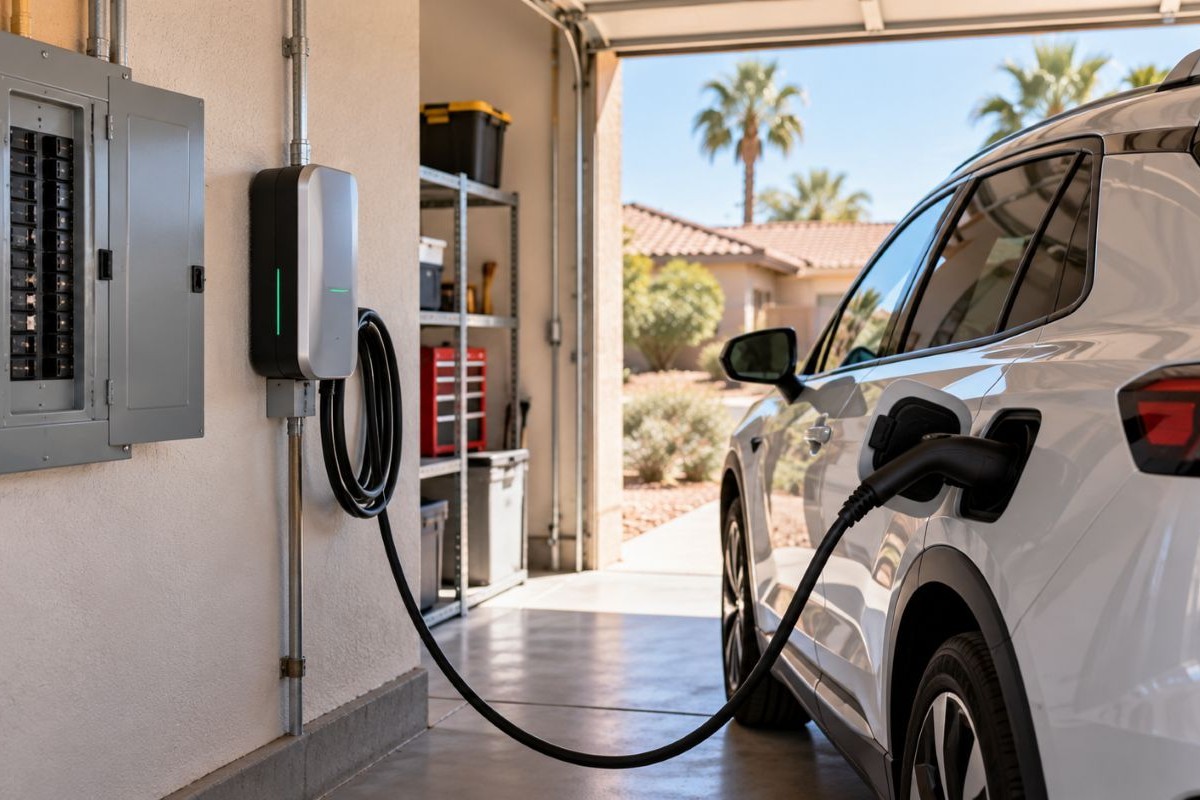
The good news! You don't always need a new electrical panel to install a Level 2 EV charger
At On The Wire Electric, we can evaluate your electrical system and help determine the safest, most practical installation option.
What Is a Level 2 EV Charger?
A Level 2 EV charger uses a 240-volt electrical connection, similar to the voltage used by many electric dryers and other large household appliances. Unlike Level 1 charging, which typically uses a standard 120-volt household outlet, Level 2 charging delivers considerably more power and can recharge your vehicle much faster. Depending on the vehicle and charger, a Level 2 system can add approximately 10–40 miles of driving range per hour of charging, although actual results vary. For most EV owners, Level 2 charging makes it practical to recharge their vehicles overnight without relying on public charging stations. However, this additional charging power also places a significant demand on your home's electrical system.
How Do I Know If My Electrical Panel Can Handle an EV Charger?
Your electrical panel distributes electricity throughout your home. Its capacity is typically identified by an amperage rating, such as 100, 150, or 200 amps. Here's a general overview of how different electrical service capacities may affect EV charger installation:
- 100-amp service - May support Level 2 charging, but often requires careful load calculations or a lower charging rate.
- 150-amp service - May have sufficient capacity, depending on existing household electrical loads.
- 200-amp service - Often provides greater flexibility, but available capacity must still be verified.
Important: Your panel's amperage rating alone doesn't determine whether an EV charger can be installed. An electrician must also consider the electrical demands of your air conditioner, water heater, range, dryer, and other major appliances. A 200-amp panel serving a home with numerous high-demand appliances might have less available capacity than expected.
Why Are Electrical Load Calculations Important?
Before installing a Level 2 EV charger, a qualified electrician should perform an electrical load calculation. This calculation evaluates your home's existing electrical requirements and determines whether additional charging equipment can be safely accommodated. For example, a Level 2 charger delivering 40 amps typically requires a dedicated 50-amp circuit because EV charging is generally treated as a continuous electrical load. A charger delivering 32 amps typically requires a 40-amp circuit.
These requirements help prevent overheating and ensure the electrical system operates within its designed capacity. Without a proper load calculation, installing a charger could overload your electrical system, create nuisance breaker trips, or introduce serious safety concerns.
Can I Install a Level 2 Charger Without Upgrading My Panel?
Yes. Depending on your home's electrical capacity, several options may allow you to install a Level 2 EV charger without replacing the electrical panel:
#1 Choose a Lower-Amperage Charger
Not every homeowner needs the fastest available charging speed. For example, a 16-amp Level 2 charger generally requires a dedicated 20-amp circuit and can still provide a meaningful improvement over standard Level 1 charging. A 24-amp charger typically requires a 30-amp circuit. For drivers who primarily charge overnight, a lower-amperage charger may provide more than enough range for daily commuting.
#2 Install an Energy Management System
Some EV charging installations can use approved energy management equipment to monitor household electrical demand and automatically reduce or interrupt EV charging when necessary. This approach can help prevent the home from exceeding its available electrical capacity. However, the equipment and installation must meet applicable electrical code requirements.
#3 Use Available Panel Capacity
Sometimes, the existing electrical panel already has sufficient capacity for a new dedicated EV charging circuit. In these cases, installation may be relatively straightforward, particularly when the charger will be located close to the panel. An electrician can verify the available capacity and determine the appropriate wiring, breaker, and charging equipment.
Should I Choose a Hardwired Charger or a Plug-In Charger?
Level 2 EV chargers are commonly available in two configurations.
Hardwired chargers connect directly to a dedicated electrical circuit. They are often a practical choice for permanent residential installations and can support higher charging rates when the electrical system permits.
Plug-in chargers connect through an appropriately rated 240-volt receptacle, commonly a NEMA 14-50 outlet. Plug-in installations require a correctly installed receptacle, suitable circuit protection, and compliance with applicable GFCI requirements.
Both options can work well, but the best choice depends on your charging needs, available electrical capacity, and installation location.
More Blog Posts
What Electrical Problems Are Common in Older Maryvale Homes?
What Electrical Problems Are Common in Older Maryvale Homes? Maryvale is one of Phoenix’s most es [...]
Can I Install a Level 2 EV Charger With My Existing Electrical Panel?
Can I Install a Level 2 EV Charger With My Existing Electrical Panel? If you've recently purchase [...]
Why Does My Circuit Breaker Keep Tripping in West Phoenix?
Why Does My Circuit Breaker Keep Tripping in West Phoenix? If a circuit breaker trips once, it ma [...]